
The “Easter or Resurrectional Blessings”, also known as *evlogitaria" from Greek ευλογητάρια, are troparia chanted during Matins (Orthros) of the Orthodox Sunday service and on the evening of Good Friday, shortly before the procession of the Epitaphios, as well as during Matins on Holy Saturday. Their composition dates back to the 11th century and refer to the announcement of the Lord’s Resurrection to the myrrh-bearing women who were mourning at the Tomb of Jesus.
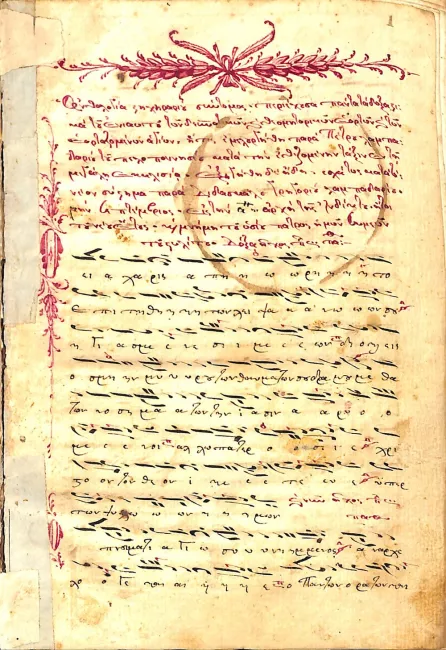 Partition manuscrite de chants de Petros Lampadarios de Péloponnèse, 1817 (collection Bibliothèque musicale Lilian Boudouris)

Αναστάσιμα Ευλογητάρια
Εὐλογητὸς εἶ, Κύριε, δίδαξόν με τὰ δικαιώματά σου.
Τῶν Ἀγγέλων ὁ δῆμος, κατεπλάγη ὁρῶν σε,
ἐν νεκροῖς λογισθέντα,
τοῦ θανάτου δὲ Σωτήρ, τὴν ἰσχὺν καθελόντα,
καὶ σὺν ἑαυτῷ τὸν Ἀδὰμ ἐγείραντα,
καὶ ἐξ ᾍδου πάντας ἐλευθερώσαντα.
Εὐλογητὸς εἶ, Κύριε, δίδαξόν με τὰ δικαιώματά σου.
Τί τὰ μύρα, συμπαθῶς τοῖς δάκρυσιν,
ὦ Μαθήτριαι κιρνᾶτε;
ὁ ἀστράπτων ἐν τῷ τάφῳ Ἄγγελος,
προσεφθέγγετο ταῖς Μυροφόροις.
Ἴδετε ὑμεῖς τὸν τάφον καὶ ᾔσθητε·
ὁ Σωτὴρ γὰρ ἐξανέστη τοῦ μνήματος.
Εὐλογητὸς εἶ, Κύριε, δίδαξόν με τὰ δικαιώματά σου.
Λίαν πρωΐ, Μυροφόροι ἔδραμον,
πρὸς τὸ μνῆμά σου θρηνολογοῦσαι·
ἀλλ’ ἐπέστη, πρὸς αὐτὰς ὁ Ἄγγελος, καὶ εἶπε·
θρήνου ὁ καιρὸς πέπαυται, μὴ κλαίετε,
τὴν Ἀνάστασιν δέ, Ἀποστόλοις εἴπατε.
Εὐλογητὸς εἶ, Κύριε, δίδαξόν με τὰ δικαιώματά σου.
Μυροφόροι γυναῖκες, μετὰ μύρων ἐλθοῦσαι,
πρὸς τὸ μνῆμά σου, Σῶτερ, ἐνηχοῦντο
αγγέλου τρανῶς πρὸς αὐτὰς φθεγγομένου·
Τί μετὰ νεκρῶν, τὸν ζῶντα λογίζεσθε;
ὡς Θεὸς γάρ, ἐξανέστη τοῦ μνήματος.
Δόξα Πατρὶ καὶ Υἱῷ καὶ Ἁγίῳ Πνεύματι.
Τριαδικὸν
Προσκυνοῦμεν Πατέρα, καὶ τὸν τούτου Υἱόν τε, καὶ τὸ Ἅγιον Πνεῦμα,
τὴν Ἁγίαν Τριάδα, ἐν μιᾷ τῇ οὐσίᾳ,
σὺν τοῖς Σεραφείμ, κράζοντες τό· Ἅγιος, Ἅγιος,
Ἅγιος εἶ, Κύριε.
καὶ νῦν καὶ ἀεὶ καὶ εἰς τοὺς αἰῶνας τῶν αἰώνων. Ἀμήν.
Θεοτοκίον
Ζωοδότην τεκοῦσα, ἐλυτρώσω Παρθένε, τὸν Ἀδὰμ ἁμαρτίας,
χαρμονὴν δὲ τῇ Εὔᾳ, ἀντὶ λύπης παρέσχες,
ῥεύσαντα ζωῆς, ἴθυνε πρὸς ταύτην δέ,
ὁ ἐκ σοῦ σαρκωθείς Θεὸς καὶ ἄνθρωπος.
Αλληλούϊα, Αλληλούϊα, Αλληλούϊα. Δόξα σοι ο Θεός [×3]
Anastásima Evlogitária
Ev̱loyītós eἶ, Kýrie, dídaxón me tá dikaiṓmatá sou.
Tṓn Aṉgélōn o dī́mos, katepláyī orṓn se,
en nekroís loyisthénta,
toú thanátou dé Sōtī́r, tī́n ἰschὺn kathelónta,
kaí sὺn eaf̱tṓ tón Adám egeíranta,
kaí ex ᾍdou pántas elef̱therṓsanta.
Ev̱loyītós eἶ, Kýrie, dídaxón me tá dikaiṓmatá sou.
Tí tá mýra, sympathṓs toís dákrysin,
ṓ Mathī́triai kirnáte?
o astráptōn en tṓ táfō Áṉgelos,
prosefthéṉgeto taís Myrofórois.
Ἴdete ymeís tón táfon kaí ᾔsthīte·
o Sōtī́r gár exanéstī toú mnī́matos.
Ev̱loyītós eἶ, Kýrie, dídaxón me tá dikaiṓmatá sou.
Lían prōḯ, Myrofóroi édramon,
prós tó mnī́má sou thrīnologoúsai·
all’ epéstī, prós af̱tás o Áṉgelos, kaí eἶpe·
thrī́nou o kairós pépaf̱tai, mī́ klaíete,
tī́n Anástasin dé, Apostólois eípate.
Ev̱loyītós eἶ, Kýrie, dídaxón me tá dikaiṓmatá sou.
Myrofóroi yynaíkes, metá mýrōn elthoúsai,
prós tó mnī́má sou, Sṓter, enīchoúnto
aṉgélou tranṓs prós af̱tás ftheṉgoménou·
Tí metá nekrṓn, tón zṓnta logízesthe?
ōs Theós gár, exanéstī toú mnī́matos.
Dóxa Patrí kaí Yiṓ kaí Ἁgíō Pnév̱mati.
Triadikón
Proskynoúmen Patéra, kaí tón toútou Yión te, kaí tó Ἅyion Pnéf̱ma,
tī́n Ἁgían Triáda, en miᾷ tῇ ousíᾳ,
sὺn toís Serafeím, krázontes tó· Ἅyios, Ἅyios,
Ἅyios eἶ, Kýrie.
kaí nῦn kaí aeí kaí eis toὺs aiṓnas tṓn aiṓnōn. Amī́n.
Theotokíon
Zōodótīn tekoúsa, elytrṓsō Parthéne, tón Adám ἁmartías,
charmonī́n dé tῇ Eὔᾳ, antí lýpīs parésches,
rhéf̱santa zōī́s, íthyne prós táf̱tīn dé,
o ek soú sarkōtheís Theós kaí ánthrōpos.
Allīloúïa, Allīloúïa, Allīloúïa. Dóxa soi o Theós [×3]
You are seeing a romanization of the Greek text because there is no translation available in English yet. Log in or register to start translating.
The “Easter or Resurrectional Blessings”, also known as *evlogitaria" from Greek ευλογητάρια, are troparia chanted during Matins (Orthros) of the Orthodox Sunday service and on the evening of Good Friday, shortly before the procession of the Epitaphios, as well as during Matins on Holy Saturday. Their composition dates back to the 11th century and refer to the announcement of the Lord’s Resurrection to the myrrh-bearing women who were mourning at the Tomb of Jesus. The collection took its name, “Eulogetaria,” from the 12th verse of Psalm 118 of David “Blessed are You, O Lord,”, known as “the Psalm of the Blameless One,” which introduces the first four eulogetaria. The eulogetaria are usually chanted to the plagius tone of A, or the 5th tone, of Byzantine music. They are chanted at a normal tempo on Sundays, usually following the musical setting by Theodoros Papaparaschos of Fokae (1790–1851), while they are sung at a much slower tempo during Matins on Holy Saturday, following the notation of Petros Lampadarios (1730–1777).

