
 Affiche de l'Office hellénique du tourisme faisant la promotion du tourisme dans les Cyclades en 1973.
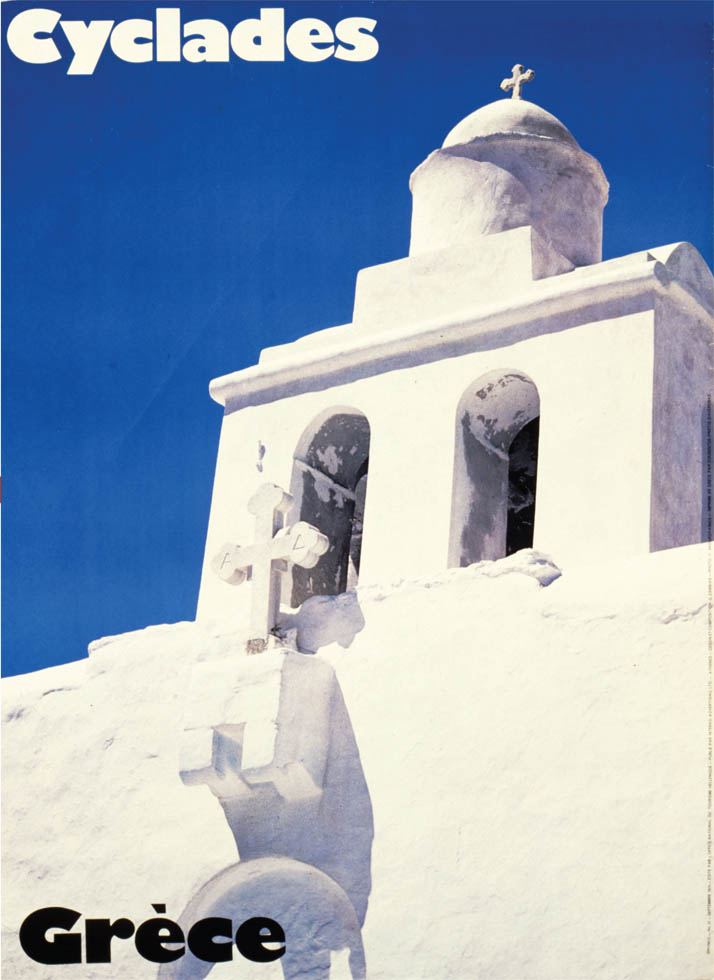
The Cyclades are a group of about 220 islands in the central Aegean Sea, forming the core of the South Aegean region of Greece. Historically they were a cradle of early Bronze‑Age Cycladic culture, later thriving under Minoan, Classical, Byzantine, Venetian and Ottoman rule before joining the modern Greek state in 1821. Administratively they are divided into 24 municipalities, the largest by area being Naxos and the most populous Mykonos. Today the Cyclades attract millions of visitors with their white‑washed villages, iconic sunsets, archaeological sites such as Delos, and vibrant nightlife.
Historical Background
The Cyclades have been inhabited since the Neolithic, but they entered world history with the distinctive Cycladic civilization of the Early Bronze Age (c. 3200–2000 BC). Marble figurines, pottery, and fortified settlements reveal a maritime culture engaged in trade across the Aegean. In the second millennium BC the islands became part of the Minoan thalassocracy, later absorbed by the Mycenaean world and mentioned in Homeric epics. Classical Greece saw the Cyclades integrated into the Delian League, with Delos serving as the league’s treasury and a major religious sanctuary dedicated to Apollo.
During the Hellenistic period the islands fell under the control of the Antigonid and later the Roman Empire, retaining their strategic importance as way‑stations for ships crossing the Aegean. Byzantine rule introduced Christianity, and numerous churches and monasteries still dot the landscape. The Fourth Crusade in 1204 fragmented the region among Latin crusader states; the Duchy of Naxos, founded by the Venetian Marco I Sanudo, governed most islands for centuries, fostering a blend of Western and Eastern architectural styles.
Ottoman conquest in the 16th century reduced the islands to a peripheral tax base, yet they enjoyed a degree of autonomy due to their remote location. The 19th‑century Greek War of Independence sparked uprisings on several islands, and by 1829 the Cyclades were formally incorporated into the Kingdom of Greece. Throughout the 20th century, the islands experienced population shifts, World War II occupations, and a post‑war tourism boom that transformed their economies and preserved their cultural heritage.
Political and Administrative Overview
In contemporary Greece the Cyclades belong to the South Aegean administrative region, one of thirteen peripheries. The region is subdivided into 24 municipalities (demoi), each corresponding to an individual island or a group of smaller islets. The largest municipality by land area is Naxos, while the most populous is Mykonos, followed closely by Paros and Santorini (Thira). Municipal councils are elected every four years, handling local services such as waste management, tourism promotion, and cultural preservation.
The regional governor coordinates infrastructure projects, maritime transport, and environmental policies across the archipelago. Funding comes from a mix of national allocations, European Union structural funds, and local taxes. Significant investments have been made in modernizing ports, expanding regional airports (e.g., on Naxos, Paros, and Santorini), and improving ferry connections that link the islands to each other and to the mainland.
Politically, the Cyclades have traditionally leaned toward centrist and liberal parties, though local issues—such as land use, preservation of traditional architecture, and sustainable tourism—often dominate electoral debates. Environmental regulations protect the islands’ fragile ecosystems, limiting over‑development and enforcing building height restrictions to maintain the iconic white‑washed aesthetic. The administrative framework strives to balance economic growth from tourism with the preservation of cultural and natural heritage.
Tourist Interest
The Cyclades are a magnet for travelers seeking a blend of natural beauty, historic intrigue, and vibrant nightlife. Iconic white‑washed villages perched on caldera cliffs, especially on Santorini, offer breathtaking sunsets that have become a global symbol of romance. Beaches range from the black volcanic sands of Perissa on Santorini to the golden dunes of Psarou on Mykonos, catering to sunbathers, windsurfers, and scuba divers alike. The archipelago’s clear Aegean waters provide excellent conditions for snorkeling, sailing, and island‑hopping cruises.
Cultural tourism thrives on the islands’ archaeological treasures. Delos, a UNESCO World Heritage Site, is one of the most important sacred islands of antiquity, with extensive ruins of temples, houses, and mosaics. The prehistoric settlement of Akrotiri on Santorini reveals a Minoan‑style city preserved under volcanic ash, often compared to Pompeii. Traditional festivals, such as the Panigiri celebrations honoring patron saints, showcase folk music, dance, and local cuisine—fresh seafood, fava beans, and the famed Cycladic cheese.
Nightlife centers on Mykonos, where world‑renowned clubs and beach bars attract a cosmopolitan crowd, while Paros and Naxos offer a more relaxed atmosphere with tavernas and boutique hotels. Sustainable tourism initiatives are growing, with many islands promoting eco‑friendly accommodations, organic farms, and hiking trails that explore rugged interiors, such as the marble cliffs of Amorgos or the olive groves of Andros. The Cyclades thus provide a diverse palette of experiences, from luxury resorts to authentic village life.
Ten Most Important Islands
- Mykonos – famed nightlife, windmills, and luxury tourism.
- Santorini (Thira) – iconic caldera, sunsets, and archaeological sites.
- Naxos – largest island, fertile plains, ancient temples.
- Paros – charming villages, marble quarries, and vibrant cultural scene.
- Delos – sacred archaeological island, UNESCO World Heritage Site.
- Andros – lush landscapes, historic monasteries, and wind‑surfing spots.
- Ios – popular beaches, youthful nightlife, and historic ruins.
- Amorgos – dramatic cliffs, pristine beaches, and the famous “Kouros” statue.
- Tinos – religious pilgrimages, marble craftsmanship, and scenic harbors.
- Antiparos – tranquil atmosphere, crystal‑clear waters, and the Cave of Antiparos.